6 Best Ice Cleats for Running on Snow and Ice (2026)
Find the best ice cleats for running on snow and ice. We compare six traction options by use, fit, and durability, with pros, cons, and buying tips.
 By Colin Foster
Updated November 25, 2026
 By Colin Foster
Updated November 2026
Running on snow or ice demands more grip than a standard road shoe can offer, and the best ice cleats for running give you that grip without sacrificing your stride. This guide compares six well-known traction options built for runners, walkers and anyone who needs to keep moving on slick sidewalks and trails. Our selection draws on published specifications, brand reputation and the patterns owners often report in their feedback, with a focus on stud design, fit across different shoe types, weight, and how well each model holds up to repeated use. We have not tested these products ourselves.
Best overall: ICETRAX V3 Tungsten Crampons – View on Amazon
Best for road running on ice: Yaktrax Run Traction Cleats – View on Amazon
Best for walk-run mixed use: Yaktrax Walk Traction Cleats – View on Amazon
Best budget pick: Sfee Ice Cleats for Boots Shoes – View on Amazon
Best for frequent everyday wear: Due North Everyday G3 Ice Cleats – View on Amazon
Best for lightweight daily use: Walk Traction Cleats Anti Slip Crampons – View on Amazon
Our Top Picks
Quick Comparison
| Product | Best for | Key feature |
|---|---|---|
| ICETRAX V3 Tungsten Crampons | Runners who want maximum bite on hard ice | Tungsten-style studs with a reflective heel |
| Yaktrax Run Traction Cleats | Road and path running on packed snow | Coil-style traction built for running |
| Yaktrax Walk Traction Cleats | Walk-run mixed use on snowy sidewalks | Coil-style traction, easy on and off |
| Sfee Ice Cleats for Boots Shoes | Budget-conscious runners and walkers | Ten steel studs with a rubber harness |
| Due North Everyday G3 Ice Cleats | Frequent daily wear across shoe types | Spike layout designed for everyday grip |
| Walk Traction Cleats Anti Slip Crampons | Lightweight use on light to moderate ice | Rubber spikes that fit boots and shoes |
ICETRAX V3 Tungsten Crampons, Ice Cleats for Shoes and Boots
ICETRAX V3 Tungsten Crampons, Ice Cleats for Shoes and Boots – Ice Grips for Snow and Ice, Non-Slip Shoe Grippers with Reflective Heel
Best for: Maximum grip on hard, glossy ice
This is the pick for runners who regularly face hard, glazed surfaces where softer stud designs struggle. The tungsten-style studs are aimed at biting into ice rather than skating across it.
Key specs
- Tungsten-style studs for ice penetration
- Reflective heel tab for low-light visibility
- Designed as a pull-on shoe grip for snow and ice
Pros
- Aggressive stud profile for hard ice
- Reflective heel adds visibility at dawn and dusk
- Suits a wide range of shoe and boot styles
Cons
- More aggressive studs can feel stiff on bare pavement
- Heavier than coil-style options
Bottom line: A strong choice for runners who mostly face hard ice and want the most bite available in a pull-on cleat.
View on AmazonYaktrax Run Traction Cleats for Running on Snow and Ice

Yaktrax Run Traction Cleats for Running on Snow and Ice (1 Pair), Large
Best for: Road and path running on packed snow
Designed specifically for running, these coil-style cleats are aimed at people who want traction without a major change in stride or a bulky profile underfoot.
Key specs
- Coil-style traction elements for snow and ice
- Rated for running use, per the product listing
- Stretch harness fits a range of shoe sizes
Pros
- Designed for running rather than walking alone
- Low profile keeps stride feeling natural
- Simple to put on and take off
Cons
- Coils can wear down faster on bare pavement
- Less bite on hard, glossy ice than stud designs
Bottom line: The most running-specific option here, suited to road and path runners dealing with packed snow.
View on AmazonYaktrax Walk Traction Cleats for Walking on Snow and Ice

Yaktrax Walk Traction Cleats for Walking on Snow and Ice (1 Pair), Medium
Best for: Walk-run mixed use on snowy sidewalks
A good fit for people who alternate between walking and short runs, such as commuters who jog to catch a bus on icy streets.
Key specs
- Coil-style traction for walking on snow and ice
- Sold as a single pair in the listed medium size
- Stretch rubber harness for easy fit
Pros
- Versatile for walking and light running
- Quick to slip on over most shoes
- Generally lightweight for daily carry
Cons
- Not specifically engineered for sustained running
- Coils may not hold up as well on long bare-pavement stretches
Bottom line: A practical choice for walkers and mixed-pace users who want one pair for sidewalks and short runs.
View on AmazonSfee Ice Cleats for Boots Shoes, Snow Grips Cleats for Ice and Snow
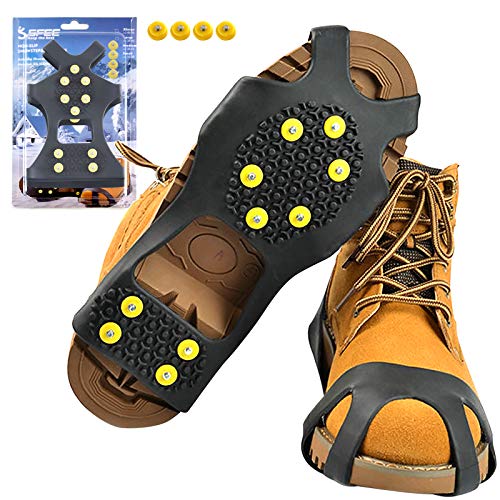
Sfee Ice Cleats for Boots Shoes, Snow Grips Cleats for Ice and Snow Anti-Slip Rubber Traction Cleats for Walking on Snow and Ice 10 Steel Studs Crampons for Hiking, Walking, Climbing, Jogging
Best for: Budget-conscious runners and walkers
A budget-friendly option for people who want stud-based traction for jogging, hiking and walking without buying a premium model.
Key specs
- Ten steel studs per cleat
- Anti-slip rubber harness
- Listed for walking, hiking, climbing and jogging
Pros
- Stud layout gives reliable grip on packed snow
- Versatile across several activities
- Good entry point for trying stud traction
Cons
- Harness durability is a common owner concern over long use
- Fit can feel snug on wider shoes
Bottom line: A sensible starting point for runners who want stud traction and are cautious about spending.
View on AmazonDue North Everyday G3 Ice Cleats for Shoes and Boots
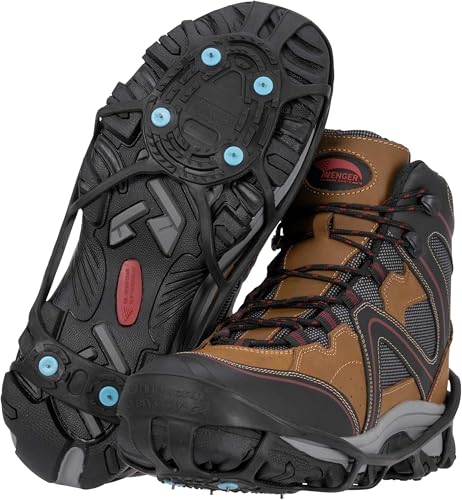
Due North Everyday G3 Ice Cleats for Shoes & Boots – Traction Spikes for Men & Women to Improve Grip on Snow & Ice
Best for: Frequent daily wear across shoe types
Built as an everyday traction solution rather than a single-purpose race item, suited to people who move between office, car and sidewalk several times a day.
Key specs
- Spike-based traction for snow and ice
- Designed for men and women
- Pull-on fit for common shoe and boot styles
Pros
- Built for regular, repeated use
- Works across a variety of footwear
- Gives confident grip on uneven ice
Cons
- Heavier than lightweight coil options
- Spikes can dull over time on pavement
Bottom line: A dependable everyday cleat for people who want one pair for daily winter routines.
View on AmazonWalk Traction Cleats Ice Cleats Anti Slip Crampons Rubber Spikes
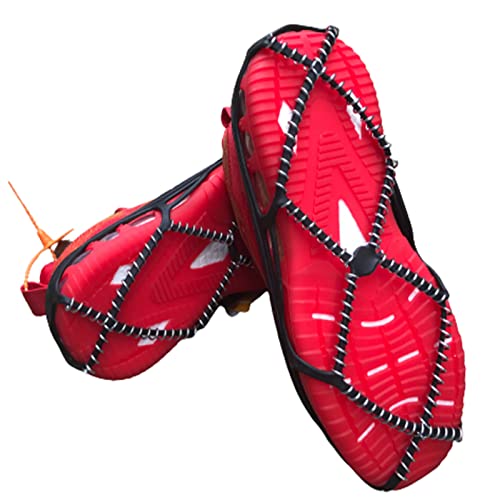
Walk Traction Cleats,Ice Cleats Anti Slip Crampons Rubber Spikes Ice Snow Grippers for Boots and Shoes for Winter Walking on Snow and Ice Climbing Hiking Mountaineering 2PCS for Man and Woman
Best for: Lightweight use on light to moderate ice
This two-piece set suits runners who prioritize low weight and a minimal feel and are mostly dealing with light to moderate icy conditions.
Key specs
- Rubber spike design
- Sold as a 2-piece set
- Marketed for walking, hiking and mountaineering
Pros
- Lightweight and easy to carry in a bag
- Fits a range of boots and shoes
- Good for light daytime use
Cons
- Less aggressive grip on hard, glazed ice
- Rubber spikes may wear faster on long runs
Bottom line: A lightweight option for runners facing moderate conditions who value low weight above maximum bite.
View on AmazonBuying Guide
Stud Type and Traction Style
Coil-style and stud-style cleats handle ice differently. Stud designs generally bite into hard ice, while coil or wire designs tend to flex with the surface and suit packed snow and mixed conditions. For running, a low profile and flexible contact often feel more natural than a heavy, rigid spike plate.
Good picks for this: ICETRAX V3 Tungsten Crampons, Yaktrax Run Traction Cleats
Running Fit and Stride Comfort
Running puts different loads on a cleat than walking does. Look for a harness that stays put during a stride and does not shift forward toward the toe. A cleat that flexes with your foot will generally feel more natural than one that locks the sole in place.
Good picks for this: Yaktrax Run Traction Cleats, Walk Traction Cleats Anti Slip Crampons
Shoe and Boot Compatibility
Check whether the harness stretches enough to cover the width and length of your shoe, and whether it sits securely over the midsole. Many owners report that cleats fit trail runners more easily than dress or minimal shoes. Measure your shoe length and width before ordering.
Good picks for this: Sfee Ice Cleats for Boots Shoes, Due North Everyday G3 Ice Cleats
Weight and Packability
Every gram on your feet adds up over a run. Lightweight designs are easier to carry in a pocket or running pack, which matters if you may need to add traction partway through a route.
Good picks for this: Walk Traction Cleats Anti Slip Crampons, Yaktrax Walk Traction Cleats
Durability and Wear Patterns
Ice cleats wear fastest on bare pavement. Owners often report that steel studs and rubber harnesses last longer than coils when used on mixed surfaces, but harness stretch can loosen over time. Inspect your cleats after each use and replace worn studs or harnesses promptly.
Good picks for this: Due North Everyday G3 Ice Cleats, ICETRAX V3 Tungsten Crampons
Visibility and Low-Light Safety
Winter running often happens in the dark. Reflective elements on the heel or harness improve how visible you are to drivers. This is a useful feature if you run before sunrise or after work in winter months.
Good picks for this: ICETRAX V3 Tungsten Crampons, Yaktrax Walk Traction Cleats
Care and Storage
Rinse cleats after use to remove salt and grit, dry them fully and store them in a bag rather than loose in a car. Keep harnesses away from heat sources, since rubber can become brittle or lose stretch.
Good picks for this: Sfee Ice Cleats for Boots Shoes, Walk Traction Cleats Anti Slip Crampons
FAQ
What are the best ice cleats for running on hard, glossy ice?
Stud-based designs with a more aggressive profile, such as the ICETRAX V3 Tungsten Crampons, are generally the better match for hard ice. Coil styles can struggle on glazed surfaces.
Are ice cleats safe for running on pavement?
They can be used on pavement for short distances, but studs and coils wear faster on bare, dry surfaces. Remove them once the ground clears to protect both the cleats and the pavement.
How should ice cleats fit a running shoe?
The harness should sit snugly over the midsole without slipping forward. Check for stretch in both length and width, and make sure the cleat does not press on the toe box during a stride.
Can I use walking cleats for running?
Walking cleats often work for light running, but purpose-built running designs typically feel more stable over longer distances. If you run regularly, consider a model listed for running.
How long do ice cleats usually last?
Lifespan depends on use, surface and care. Owners commonly report that frequent pavement use shortens life considerably. Replace studs or harnesses when they show visible wear or loosen.
Should I wear ice cleats on trails?
Many runners use ice cleats on packed snow trails. Be cautious on rocky or uneven terrain, where cleats can roll or catch. A consult with a local running or outdoor safety professional can help you decide what suits your route.
Conclusion
For maximum bite on hard ice, the ICETRAX V3 Tungsten Crampons lead this group. For road and path runners on packed snow, the Yaktrax Run Traction Cleats are the most running-specific choice here. Walkers and mixed-pace users may prefer the Yaktrax Walk Traction Cleats, while budget-minded buyers can start with the Sfee Ice Cleats. The Due North Everyday G3 suits daily wear across footwear, and the Walk Traction Cleats Anti Slip Crampons suit lightweight use in moderate conditions. Match the design to your typical surface and stride, and check the fit against your shoes before you run.
Sources
- Guidance on winter safety, slips and falls, and staying active in cold weather (cdc.gov)
- Information on winter trail conditions and traction considerations for outdoor travel (nps.gov)
- Position resources on exercise safety and training in cold environments (acsm.org)
Before you buy: helpful guides
Related reading
- Yaktrax Diamond Grip Ice Cleats: 5 Best Options for Winter Walking (2026)
- Top 7 Strap on Cleats for Ice Compared: Our Picks and Buyer's Guide
- Top 6 Best Shoe Cleats for Ice Walking in 2026
- 7 Best Winter Walking Ice Cleats for Icy Sidewalks and Trails (2026)
About Colin Foster
Colin Foster is part of our editorial team and reviews and edits our everyday winter gear guides, checking product details against manufacturer specifications and owner feedback.
About the author
Colin Foster writes reviews and buying guides for Snow Crystals.