6 Best Boots with Retractable Ice Cleats for Winter Walking (2026)
Find the best boots with retractable ice cleats for icy driveways, commutes and winter hikes. Compare six picks by traction, warmth and fit.
 By Colin Foster
Updated November 20, 2026
 By Colin Foster
Updated November 2026
Boots with retractable ice cleats let you walk on ice without carrying a separate pair of traction devices, and the cleats tuck away when you reach dry pavement or indoors. This list compares six options against the criteria that matter most for daily winter use: how aggressive the cleat system is, how warm and waterproof the upper is, how the boot fits a range of foot widths, and whether the outsole handles both ice and snow. Each pick is matched to a specific need so you can choose quickly.
Our top picks at a glance
- 1TOP CHOICEBest overallNorfin Klondike 2 – Winter Boots for Fishing, Hunting and Hiking – AntView on Amazon
- 2
 TOP CHOICEBest for wading and wet terrain8 Fans Wading Boots Lightweight, Steel Studs Terrain Grip,FishingView on Amazon
- 3
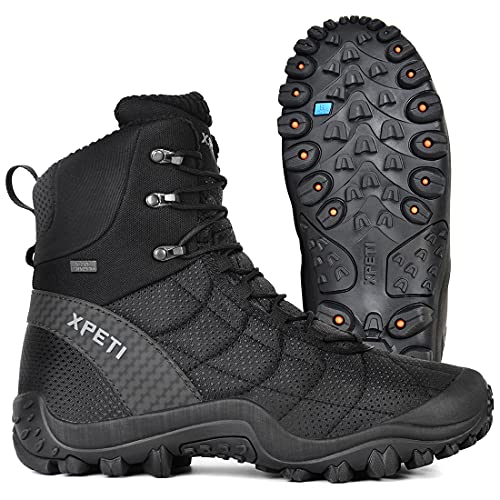 TOP CHOICEBest for cold-weather trekkingXPETI Men's Crest Thermo Snow Trekking Boot, Insulated, High-Traction GripView on Amazon
- 4
 Best for women who want interchangeable solesKorkers Women's South Lake Winter Boots – Extra Cozy and WaterproofView on Amazon
- 5
 Best for deep snow and ice mixesKorkers Women's Snowmageddon with SnowTrac Soles BootsView on Amazon
- 6
 Best for aggressive studded gripIcebug Womens Ivalo4 BUGrip Winter Walking Boot with Carbide Studded Traction SoleView on Amazon
Our Top Picks
| Product | Best for | Key feature |
|---|---|---|
| Norfin Klondike 2 | All-round winter walking | Retractable ice cleats |
| 8 Fans Wading Boots | Wet, rocky terrain | Steel studs and claw sole |
| XPETI Men’s Crest Thermo | Cold-weather trekking | Insulated high-traction grip |
| Korkers South Lake Winter | Women’s daily use | Interchangeable TrailTrac sole |
| Korkers Snowmageddon | Deep snow and ice | SnowTrac soles |
| Icebug Ivalo4 BUGrip | Steep, icy paths | Carbide-studded traction |
Norfin Klondike 2 – Winter Boots for Fishing, Hunting and Hiking – Anti Slip – Retractable ice Cleats
Norfin Klondike 2 – Winter Boots for Fishing, Hunting and Hiking – Anti Slip – Retractable ice Cleats for Added Safety and Protection – Made of EVA Material – Removable Insole, Grey, 11
Best for: All-round winter walking with built-in retractable cleats.
This suits anyone who wants one boot for icy sidewalks, outdoor chores and short winter walks, with cleats that deploy when needed.
Pros
- Retractable cleats handle icy surfaces without a separate device.
- Removable insole makes drying and fit adjustment simple.
Cons
- Cleats are better suited to packed ice than deep, loose snow.
8 Fans Wading Boots Lightweight, Steel Studs Terrain Grip,Fishing
8 Fans Wading Boots Lightweight, Steel Studs Terrain Grip,Fishing | Quick-drying rubber boots, built to last. Non-slip claw bottom grips slippery rocks. Great gift for men who love fishing
Best for: Wet, rocky terrain where ice and slick stone meet.
Best for anglers and outdoor workers who spend time on wet, uneven ground in cold conditions.
Pros
- Steel studs and a claw-style bottom grip slippery rock.
- Quick-drying rubber construction suits wet use.
Cons
- Rubber uppers offer less insulation than insulated winter boots.
XPETI Men’s Crest Thermo Snow Trekking Boot, Insulated, High-Traction Grip
XPETI Men’s Crest Thermo Snow Trekking Boot, Insulated, High-Traction Grip Trekking Boot Black 9.5
Best for: Cold-weather trekking on snow and ice.
A good fit for hikers and walkers who need insulation and grip for longer outings in winter conditions.
Pros
- Insulated upper suits sustained cold exposure.
- High-traction outsole performs well on mixed snow and ice.
Cons
- Heavier than casual winter boots, which may tire some walkers.
Korkers Women’s South Lake Winter Boots – Extra Cozy and Waterproof
Korkers Women's South Lake Winter Boots – Extra Cozy and Waterproof – Includes Interchangeable TrailTrac Sole, Brown, 7
Best for: Women who want interchangeable soles for different surfaces.
Suited to women who switch between snowy sidewalks, muddy trails and icy patches and want one boot that adapts.
Pros
- Interchangeable TrailTrac sole adapts to changing conditions.
- Waterproof construction keeps feet dry in slush.
Cons
- Swapping soles adds a step compared with a fixed outsole.
Korkers Women’s Snowmageddon with SnowTrac Soles Boots
Korkers Women's Snowmageddon with SnowTrac Soles Boots, Black, 10
Best for: Deep snow and mixed ice.
A fit for women who regularly deal with heavy snowfall and need a sole designed to bite through loose snow.
Pros
- SnowTrac soles are built for deep, loose snow.
- Warm, waterproof build suits long exposure.
Cons
- Bulkier profile may feel heavy for short city walks.
Icebug Womens Ivalo4 BUGrip Winter Walking Boot with Carbide Studded Traction Sole
Icebug Womens Ivalo4 BUGrip Winter Walking Boot with Carbide Studded Traction Sole, Mulberry, L08.5
Best for: Steep, icy paths that demand aggressive grip.
Best for walkers on hard, glazed ice who want carbide studs rather than retractable cleats.
Pros
- Carbide studs bite into hard, glazed ice.
- Designed for sustained winter walking on steep paths.
Cons
- Studs may feel aggressive on dry pavement.
Buying Guide
Cleat Type and Deployment
Not all retractable cleats work the same way. Some use a lever or pull mechanism you operate by hand, while others sit in a fixed recessed system that extends with a simple press. Check how easy the cleats are to deploy and retract with gloves on, since that is when you will most need them.
Also consider how many cleats the boot has and where they sit under the forefoot and heel. More contact points generally mean better grip on steep or glassy ice.
Insulation and Warmth
Winter walking often means standing still or moving slowly in cold conditions, so insulation matters as much as traction. Look for boots rated for the temperatures you expect, and consider whether a removable insole or liner suits your needs, since it lets you dry the boot or swap in a thicker layer.
Avoid choosing purely by warmth rating, though. An overly bulky boot can reduce balance and make it harder to feel the ground, which works against the purpose of ice traction.
Waterproofing and Upper Material
Slush, wet snow, and meltwater will soak into a boot that is not properly sealed, and wet feet lose heat quickly. Check whether the upper is fully waterproof or only water-resistant, and whether the seams and collar are sealed. Materials such as rubber or synthetic uppers tend to handle wet conditions better than untreated leather.
Fit, Width, and Lacing
A secure fit keeps your foot stable on uneven ice, and a boot that is too loose can slide and cause blisters. Pay attention to available widths and whether the lacing system holds the heel firmly. If you wear thick winter socks, size up slightly to avoid pinching.
Outsole Versatility
Some boots work well on ice and packed snow but struggle on wet pavement or mud. If you will walk on mixed surfaces, consider whether the outsole has a grippy rubber compound on the sides and heel in addition to the cleat system. Interchangeable soles, where offered, can give you more flexibility across seasons.
FAQ
Do retractable ice cleats work on all types of ice?
Retractable cleats give strong grip on most packed and glazed ice, but very thick or deeply rutted ice may still require longer metal traction devices. Performance also depends on how well the cleats extend and how much weight you put on them. Test your boots on a gentle slope first if you are unsure.
Can I wear these boots on dry pavement?
Yes, you can, and that is the main advantage of retractable designs. Retract the cleats before walking on dry surfaces or indoors to avoid damaging floors and to keep your stride comfortable. Make sure the cleats are fully retracted before you step onto hard surfaces.
How should I size winter boots with cleats?
Measure your foot in the afternoon when it is slightly swollen, and compare to the brand’s size chart. Plan to wear the socks you will use in winter when trying on boots. Leave a little room at the toe so your foot does not press against the front during descents.
How do I maintain retractable cleats?
Clean out snow, ice, and grit from the cleat housing after each outing, since debris can stop the mechanism from moving freely. Check the cleats for wear and look for any loose parts. Store the boots with the cleats retracted and let them dry fully before putting them away.
Are these boots suitable for hiking as well as walking?
Many winter boots with cleats are designed for light hiking and everyday walking on snow and ice, but they may not offer the ankle support or stiffness needed for steep or technical terrain. Check the intended use in the product details. For heavy backpacking or mountaineering, a dedicated hiking boot is usually the better choice.
Can I use these boots for fishing or hunting?
Some options in this list are built for fishing or wading, which means their waterproofing and grip suit wet, uneven ground. Others focus on walking in snow and ice. Match the boot to your main activity, and confirm the waterproof rating if you plan to stand in water for long periods.
Conclusion
If you want the most aggressive grip for wet, uneven, or fishing-related conditions, the wading and fishing-oriented options suit you best. If your priority is everyday winter walking with a warm, waterproof upper and reliable traction, the trekking and walking boots in this list are a better fit.
For buyers who need a wider or more adjustable fit, or who plan to switch between snow and bare ground, the boots with interchangeable soles and cleat systems offer the most flexibility. Choose based on your main terrain, the temperatures you face, and how often you will deploy the cleats.
Related reading
- Winter Boots with Ice Cleats: How to Choose and Use Them Safely
- Wenko Ladies Ice Cleats: Which Fit Women's Boots and How to Choose
- Ice Cleats Size Chart: How to Pick the Right Fit for Your Boots
- How to Put Ice Cleats on Boots: A Step-by-Step Guide for Winter Walking
About Colin Foster
Colin Foster is part of our editorial team and reviews and edits our everyday winter gear guides, checking product details against manufacturer specifications and owner feedback.
About the author
Colin Foster writes reviews and buying guides for Snow Crystals.