3 Best Men’s North Face Down Jacket Picks for Winter 2026
Looking for a men's North Face down jacket for cold winters? Compare three top picks by fill, fit, weather resistance and warmth to find your match.
 By Graham Fisher
Updated November 22, 2026
 By Graham Fisher
Updated November 2026
Choosing a men’s North Face down jacket comes down to how cold your winters really are, how much you move while wearing it, and whether you need protection from light rain or wet snow. This guide compares three North Face models that cover different needs, from a hooded, high-fill-power puffer to a wind- and water-resistant synthetic option and a versatile insulated coat. Each pick is judged on insulation type and fill, weather resistance, packability, hood design and general fit, so you can narrow the list to the jacket that suits your daily routine.
Our Top Picks
Quick Comparison
| Product | Best for | Key feature |
|---|---|---|
| THE NORTH FACE Men’s Classic Down Hooded Jacket | Very cold days and layering under a shell | 700 fill recycled down with a insulated hood |
| The North Face ThermoBall Insulated Jacket | Wet or damp winter conditions | Synthetic insulation that stays warm when damp |
| The North Face Aconcagua 3 Jacket | Everyday wear, commuting and light outdoor use | Wind and water resistant puffer with a versatile cut |
THE NORTH FACE Men’s Classic Down Hooded Jacket
THE NORTH FACE Men's Classic Down Hooded Jacket, TNF Black, Large | Warm 700 Fill Recycled Down, Highly Packable Puffer, Insulated Hood with Rear Cinch Cord, Concealed Zip Hand Pockets
This is the pick for men who spend long stretches outdoors in serious cold, such as winter dog walkers, shovelers and anyone who stands still at bus stops or on the sidelines. The high fill down provides substantial loft for its weight, and the hood adds meaningful heat retention around the head and neck.
Key specs
- Insulation: 700 fill power recycled down
- Hooded design with a rear cinch cord for adjustable coverage
- Concealed zip hand pockets
- Highly packable, so it compresses into a small stuff sack for travel
- Color: TNF Black
Pros
- High fill power gives strong warmth for its weight
- The hood with cinch cord traps heat well in wind
- Packs down small for storage or carrying as a backup layer
Cons
- Down loses insulating value if it gets soaked, so it needs a shell in heavy snow or rain
- The fit runs on the trim side for some owners, so sizing up may be needed for thick layers underneath
The North Face ThermoBall Insulated Jacket
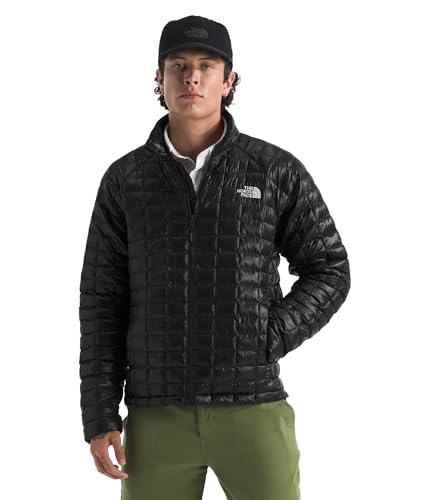
The North Face ThermoBall Insulated Jacket (Standard & Big Size), Blk, L | Wind & Water Resistant, Secure Zip Pockets
This model suits men who deal with damp conditions, such as slushy commutes, wet snow or rainy winter days. Synthetic insulation keeps much of its warmth when it gets damp, which is the main reason owners of synthetic puffers often choose it over down for wet climates.
Key specs
- Synthetic ThermoBall insulation
- Wind and water resistant outer shell
- Secure zip pockets
- Available in standard and big sizes
- Color: Black
Pros
- Insulation holds warmth better than down when damp
- Water resistant shell handles light rain and wet snow
- Secure zip pockets keep keys and a phone out of the weather
Cons
- Synthetic fill is usually heavier and bulkier than down at the same warmth level
- Does not pack as small as a high-fill down jacket
The North Face Aconcagua 3 Jacket

The North Face Aconcagua 3 Jacket (Standard & Big Size), Smoked Pearl, XL | Wind & Water Resistant Puffer Coat, Insulated
The Aconcagua 3 is a good fit for men who want one coat for the commute, errands and light weekend outdoor time. It sits in the middle ground between a light puffer and a heavy expedition parka, so it works across a wide range of winter temperatures when paired with the right base layers.
Key specs
- Insulated puffer construction
- Wind and water resistant outer fabric
- Available in standard and big sizes
- Color: Smoked Pearl
Pros
- Versatile warmth for city and trail use
- Wind and water resistance adds protection in changing weather
- Comfortable for everyday wear and driving
Cons
- Not as warm per ounce as a high-fill down jacket in deep cold
- Sizing and cut vary by owner preference, so checking the size chart is important
Buying Guide
Selection criteria
The picks above were compared on insulation type and fill, weather resistance, packability, hood design and owner feedback patterns on fit. They were not physically tested for this article. Use these criteria to decide which model fits your climate and habits.
Important features to check
- Fill power: Higher fill power (for example 700) means the down loft more air per ounce, so you get more warmth without more bulk.
- Insulation type: Down is lightest and most compressible. Synthetic insulation handles moisture better and is often easier to care for.
- Shell fabric: Wind resistance blocks cold air, and water resistance sheds light rain and wet snow. Fully waterproof shells are a separate category.
- Hood: A hood with a cinch cord keeps heat in around the head and neck. Check that it fits over a hat or stays put when you turn your head.
- Pockets: Zipped pockets keep valuables secure and keep hands warm when you use them.
Specs to check before you buy
- Fill type and fill power for down models
- Whether the shell is wind resistant, water resistant or waterproof
- Length: a longer cut covers the hips and works better in very cold weather
- Size chart measurements for chest and sleeve length, not just the size label
- Whether the model is offered in regular, tall or big sizes if you need them
Choosing by need
- Deep cold and low activity: Choose a high-fill down model with a hood.
- Wet or slushy winters: Choose a synthetic insulated jacket with a water resistant shell.
- Mixed use, commuting and light outdoor time: Choose a versatile insulated puffer that balances warmth and comfort.
Things to watch out for
- Do not assume “water resistant” means waterproof. Heavy wet snow will eventually soak through.
- Down clumps and loses loft when wet, so dry it fully before storage.
- Oversized warmth can cause sweating during activity. Unzip or layer lighter when you start moving hard.
FAQ
What is fill power in a men’s down jacket?
Fill power measures how much space one ounce of down occupies. Higher numbers mean the down loft more air and trap more warmth for the same weight. Fill power alone does not determine warmth, since the total amount of down also matters.
Is a down jacket good for wet snow?
Down loses insulation when it gets soaked. Look for a water resistant shell and consider synthetic insulation if you regularly face wet conditions. For heavy wet snow, a waterproof shell layered over the jacket is more reliable.
How should a men’s down jacket fit?
It should allow you to move your arms freely and fit comfortably over a sweater or thin base layer without being tight at the shoulders. The hem should cover the hips. Check the brand’s size chart for chest and sleeve measurements, since sizing can vary by model.
How do I wash a down jacket?
Follow the care label, and use a front-loading washer on a gentle cycle with a down-specific cleaner. Dry on low heat with a few clean tennis balls to break up clumps. Drying can take several hours, so make sure the down is fully dry before storing.
Can I wear a down jacket for hiking?
Yes, but it is best as a warm layer during stops or in cold conditions rather than as an active layer. Sweating reduces down’s performance, so unzip or remove it when you start climbing. Pair it with a shell in precipitation.
Should I buy a hooded or non-hooded model?
A hood helps retain heat around the head and neck, which matters in wind and snow. Non-hooded jackets pair better with hats and are less bulky under helmets or in tight spaces. Choose based on how often you expect wind and cold.
How long does a down jacket last?
With regular care, a quality down jacket can last many winters. Store it loosely rather than compressed, and avoid repeated soaking. If you notice loss of loft or warmth, consult the manufacturer’s care guidance or a professional repair service.
Conclusion
For the coldest, driest days, the THE NORTH FACE Men’s Classic Down Hooded Jacket offers the most warmth for its weight, especially if you value a hood and packability. If your winters bring slush, wet snow or rain, the The North Face ThermoBall Insulated Jacket is the better match because its synthetic fill keeps working when damp. For a versatile everyday coat that handles commuting and light outdoor use, the The North Face Aconcagua 3 Jacket is a balanced choice. Match the insulation and shell to your local weather, confirm the size chart, and you will end up with a men’s North Face down jacket that fits your winter routine.
Related reading
- Women's Down Jacket North Face: How to Choose the Right Warmth (2026)
- Down Jacket Men The North Face: How to Choose the Right Warmth (2026)
- The North Face Women Down Jacket: How to Choose the Right Warmth (2026)
- North Face Womens Goose Down Jacket: A Practical Guide (2026)
About Graham Fisher
Graham Fisher is part of our editorial team and reviews and edits our everyday winter gear guides, checking product details against manufacturer specifications and owner feedback.
About the author
Graham Fisher writes reviews and buying guides for Snow Crystals.