7 Best Warmest Down Jacket Women’s (2026): Our Picks
Find the warmest down jacket women's shoppers rely on for cold winters. Compare seven picks by fill, insulation, hood and weather resistance.
 By Graham Fisher
Updated November 20, 2026
 By Graham Fisher
Updated November 2026
Shopping for the warmest down jacket women’s winter wear can feel like a guessing game, since fill power, shell fabric and insulation type all affect how warm a coat actually feels. This list compares seven jackets across the criteria that matter most for cold weather: insulation type and weight, hood design, wind and water resistance, and how well the coat fits over a sweater. Each pick below is a product listing with owner feedback patterns and manufacturer specs as the basis, not personal testing.
Best overall: THE NORTH FACE Women’s Aconcagua Hooded Jacket – View on Amazon
Best for extreme cold: BINACL Women’s Thickened Down Alternative Jacket – View on Amazon
Best for mountain use: Rab Women’s Mythic Ultra Jacket – View on Amazon
Best for wet conditions: ALPIXIS Women’s Quilted Down Coat – View on Amazon
Best for long coverage: Fitouch Women’s Waukee Long Down Coat – View on Amazon
Best budget pick: Orolay Women’s Thickened Down Jacket – View on Amazon
Best for everyday warmth: wantdo Women’s Heavy Winter Down Jacket – View on Amazon
Our Top Picks
Quick Comparison
| Product | Best for | Key feature |
|---|---|---|
| THE NORTH FACE Women’s Aconcagua Hooded Jacket | Overall winter use | 200g synthetic insulation |
| BINACL Women’s Thickened Down Alternative Jacket | Extreme cold | Big hood, thick padding |
| Rab Women’s Mythic Ultra Jacket | Mountain use | 900-fill, wind-resistant |
| ALPIXIS Women’s Quilted Down Coat | Wet conditions | Waterproof, detachable hood |
| Fitouch Women’s Waukee Long Down Coat | Long coverage | 750+ fill, long cut |
| Orolay Women’s Thickened Down Jacket | Budget warmth | Thickened down-style fill |
| wantdo Women’s Heavy Winter Down Jacket | Everyday cold | Heavy-fill puffer design |
THE NORTH FACE Women’s Aconcagua Hooded Jacket
THE NORTH FACE Women's Aconcagua Hooded Jacket, TNF Black, L | Updated with Synthetic Insulation (200g), Wind & Water Resistant, Insulated Hood, Adjustable Hem, Warm Winter Puffer Coat
Best for: Overall winter use
A solid all-round choice for people who want a recognized brand and a balanced mix of warmth and weather protection for commuting and cold walks.
Pros
- 200g synthetic insulation keeps warmth when damp
- Insulated hood and adjustable hem seal out drafts
Cons
- Synthetic fill is bulkier than down for the same warmth
BINACL Women’s Thickened Down Alternative Jacket
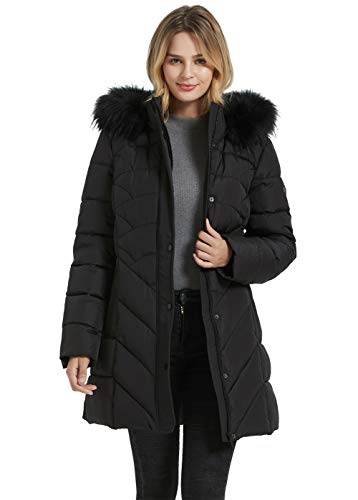
BINACL Women's Thickened Down Alternative Jacket, Extreme Cold Big Hood Lined Outwear Parka Puffer Gift Cotton Padding Outwear Workout Training Fast Fall Ski Jacket with Detachable Fur Hood(Black,M)
Best for: Extreme cold
Suited to people who spend long periods outdoors in sub-freezing temperatures and want a generous hood and heavy padding.
Pros
- Thick padding and a large detachable fur-style hood
- Down-alternative fill tolerates moisture better than real down
Cons
- Heavy and roomy, so less practical for active movement
Rab Women’s Mythic Ultra Jacket

Rab Women's Mythic Ultra Jacket – Black – S | 900-Fill, Wind-Resistant, Water-Repellent, Insulated Coat for Alpine Climbing & Mountaineering
Best for: Mountain use
Designed for alpine climbing and mountaineering, this is aimed at users who need high fill power in a compact, wind-resistant shell.
Pros
- 900-fill down gives strong warmth for its weight
- Wind-resistant and water-repellent shell
Cons
- Fit is technical and may run snug over thick layers
ALPIXIS Women’s Quilted Down Coat

ALPIXIS Women's Quilted Down Coat | Waterproof, Windproof, Detachable Hood, Thicken Flannel Lined, Warm Puffer Jacket for Winter
Best for: Wet conditions
A good fit for slushy, rainy winter days when keeping dry matters as much as staying warm.
Pros
- Waterproof and windproof shell with a detachable hood
- Flannel lining adds comfort against the skin
Cons
- Quilted styling runs warmer than it looks, so it may be too much for mild days
Fitouch Women’s Waukee Long Down Coat

Fitouch Women's Waukee Long Down Coat | 750+ Fill Power Jacket | Winter Parka
Best for: Long coverage
For those who want a longer cut that covers the hips and thighs, useful for windy walks and standing outdoors.
Pros
- 750+ fill power for a warm, lofty feel
- Longer length blocks wind around the lower body
Cons
- Length can feel restrictive when driving or sitting for long periods
Orolay Women’s Thickened Down Jacket

Orolay Women's Thickened Down Jacket Green Medium
Best for: Budget warmth
A budget-minded option for shoppers who want substantial insulation without paying for premium fill or branding.
Pros
- Thickened fill provides solid warmth for typical winter days
- Straightforward design that layers easily
Cons
- Shell and fill quality are less refined than premium brands
Buying Guide
Insulation Type and Fill Power
Down and synthetic insulation both trap heat, but they behave differently. Down offers a high warmth-to-weight ratio and compresses well, while synthetic fill keeps more of its insulating ability when damp and is usually easier to care for. Higher fill power generally means more loft and warmth for the same weight, so check the listed fill before comparing coats.
Shell Fabric and Weather Resistance
The outer shell determines how the jacket handles wind, snow and rain. Look for wind-resistant or water-repellent finishes if you will be outdoors in unsettled weather, and reserve fully waterproof shells for wet, slushy conditions. A breathable shell helps prevent sweat from building up during active use.
Hood Design and Coverage
A good hood should fit over a hat or stay snug without blocking your peripheral vision. Detachable or insulated hoods add flexibility, and an adjustable drawcord helps keep cold air out around the face. If you spend long periods in harsh wind, prioritize a hood that cinches closely.
Length, Fit and Layering Room
Longer coats cover the hips and thighs, which adds warmth when temperatures drop well below freezing. Make sure the cut leaves room for a thick sweater or fleece underneath without restricting arm movement. Adjustable hems and cuffs help seal in heat and block drafts.
Intended Use and Temperature Range
Think about where you will wear the jacket most. A heavily insulated parka suits extended cold-weather standing or mountain activity, while a lighter puffer works better for commuting and mild winters. Matching the coat to your typical conditions often matters more than chasing the highest insulation rating.
FAQ
What makes a down jacket the warmest?
Warmth depends on the amount and quality of insulation, the loft it creates, and how well the shell blocks wind. Higher fill power and a longer, fully insulated cut generally keep you warmer. Adding a windproof outer layer also improves performance in cold, breezy conditions.
Is down or synthetic insulation better for winter?
Down provides excellent warmth for its weight and packs down small, which suits dry, very cold climates. Synthetic insulation performs better when exposed to moisture and is often easier to wash. The best choice depends on how dry or wet your winter tends to be.
How should a winter down jacket fit?
The jacket should be roomy enough to wear over a sweater without pulling tightly at the shoulders or arms. Avoid a fit so loose that cold air circulates freely inside. Try on the coat with the layers you plan to wear underneath.
Can I machine wash a down jacket?
Many down and synthetic jackets can be washed, but you should always check the care label first. Use a gentle cycle with a mild detergent designed for technical outerwear, and dry on low heat with a few clean dryer balls to restore loft. Avoid fabric softeners, which can reduce insulating performance.
Are hooded down jackets better than hoodless ones?
A hood adds meaningful warmth because your head and neck lose a lot of heat in cold weather. Detachable hoods offer the option of wearing or removing it depending on conditions. If you live in a region with frequent snow or wind, a hood is usually worth having.
Conclusion
If you want a balanced all-around winter coat with good weather protection and a well-designed hood, the North Face option is a strong starting point. For severe cold and long periods outdoors, the heavier parka-style jackets are better suited to the job.
Shoppers focused on mountaineering or alpine conditions will appreciate the high-fill technical jacket, while those wanting a lighter, more everyday puffer will find the mid-weight options more practical for commuting and mild winters.
Related reading
- Women's Warm Down Jacket Picks: 7 Best for Cold Winters (2026)
- Women's Down Jacket North Face: How to Choose the Right Warmth (2026)
- Women's Down Jacket Long: 6 Things to Check Before You Buy (2026)
- Women's Columbia Down Jacket: 5 Best Picks for Cold Winters (2026)
- Sale Down Jacket Women's: 5 Best Picks for Winter 2026
- Max Mara Down Jacket Picks: 7 Best Women's Down Coats for Winter 2026
About Graham Fisher
Graham Fisher is part of our editorial team and reviews and edits our everyday winter gear guides, checking product details against manufacturer specifications and owner feedback.
About the author
Graham Fisher writes reviews and buying guides for Snow Crystals.