7 Best Winter Walking Ice Cleats for Icy Sidewalks and Trails (2026)
Compare the best winter walking ice cleats for icy sidewalks, trails and driveways. See which traction aids suit your boots, terrain and daily walks.
 By Colin Foster
Updated November 20, 2026
 By Colin Foster
Updated November 2026
Winter walking ice cleats are slip-on traction aids that stretch over your boots and bite into packed snow and glare ice. The right pair depends on how much ice you face, how often you walk, and whether your boots are flat-soled or have a lug pattern. The picks below were chosen by reviewing manufacturer specifications, brand reputation and common owner feedback about fit, grip and durability. We did not test these products ourselves.
Best overall: Winter Walking Low-Pro Ice Cleat – View on Amazon
Best for deep snow and heavy ice: Winter Walking High-Pro Ice Cleat – View on Amazon
Best for large boots: Winter Walking Easy Spike Ice Cleat – View on Amazon
Best for hiking and mountaineering-style use: Crampons Ice Cleats Traction Snow Grips – View on Amazon
Best for everyday walks: Yaktrax Walk Traction Cleats – View on Amazon
Best budget pick: Aliglow Ice Snow Grips – View on Amazon
Best for mixed terrain: Yaktrax Pro Traction Cleats – View on Amazon
Our Top Picks
Quick Comparison
| Product | Best for | Key feature |
|---|---|---|
| Winter Walking Low-Pro Ice Cleat | Overall use on ice | Low-profile heavy-duty coils |
| Winter Walking High-Pro Ice Cleat | Deep snow and heavy ice | Taller traction spikes |
| Winter Walking Easy Spike Ice Cleat | Large boots | X-Large fit, lightweight |
| Crampons Ice Cleats Traction Snow Grips | Hiking and steep trails | 19 stainless steel spikes |
| Yaktrax Walk Traction Cleats | Everyday walks | Simple stretch-on design |
| Aliglow Ice Snow Grips | Budget buyers | Over-shoe anti-slip spikes |
| Yaktrax Pro Traction Cleats | Mixed terrain | 360-degree grip, heel tab |
Winter Walking Low-Pro Ice Cleat, Heavy-Duty Industrial Grade Traction Aid for Walking on Snow and Ice
Winter Walking Low-Pro Ice Cleat, Heavy-Duty Industrial Grade Traction Aid for Walking on Snow and Ice, Size Large (1 Pair)
Best for: Overall use on ice
Suited to people who want a dependable all-round pair for sidewalks, parking lots and driveways. The low profile keeps stride comfortable on flat ground.
Pros
- Low profile fits most walking shoes
- Heavy-duty coils suit regular ice
Cons
- Less bite in deep, packed snow
Winter Walking High-Pro Ice Cleat, Heavy-Duty Industrial Grade Traction Aid for Walking on Snow and Ice

Winter Walking High-Pro Ice Cleat, Heavy-Duty Industrial Grade Traction Aid for Walking on Snow and Ice, Size Large (1 Pair)
Best for: Deep snow and heavy ice
Aimed at walkers who cross unplowed snow or steep, slick approaches where a taller spike height helps.
Pros
- Taller spikes grip deeper snow
- Heavy-duty construction for icy surfaces
Cons
- Higher profile can feel bulky in narrow boots
Winter Walking Easy Spike Ice Cleat, Lightweight Industrial Strength Traction Aid for Walking on Snow and Ice

Winter Walking Easy Spike Ice Cleat, Lightweight Industrial Strength Traction Aid for Walking on Snow and Ice, Size X-Large (1 Pair)
Best for: Large boots
Designed for people with wide or large-size footwear who need a cleat sized to fit without straining the stretch band.
Pros
- X-Large size suits big boots
- Lightweight for all-day carrying
Cons
- Lighter build may wear faster on rough ice
Crampons Ice Cleats Traction Snow Grips for Boots Shoes Women Men Anti Slip 19 Stainless Steel Spikes

Crampons Ice Cleats Traction Snow Grips for Boots Shoes Women Men Anti Slip 19 Stainless Steel Spikes Safe Protect for Hiking Fishing Walking Climbing Mountaineering
Best for: Hiking and steep trails
Fits hikers and anglers who want a spike-heavy pair for trails, slopes and uneven ground that goes beyond sidewalks.
Pros
- 19 stainless steel spikes for aggressive bite
- Works for both men’s and women’s footwear
Cons
- Spikes can feel aggressive on pavement
Yaktrax Walk Traction Cleats for Walking on Snow and Ice

Yaktrax Walk Traction Cleats for Walking on Snow and Ice (1 Pair), Medium
Best for: Everyday walks
A straightforward option for commuters and dog walkers who want quick on and off with reliable traction on packed snow.
Pros
- Simple stretch-on design
- Comfortable for longer walks
Cons
- Not built for steep, deep-snow terrain
Aliglow Ice Snow Grips Over Shoe/Boot Traction Cleat Spikes
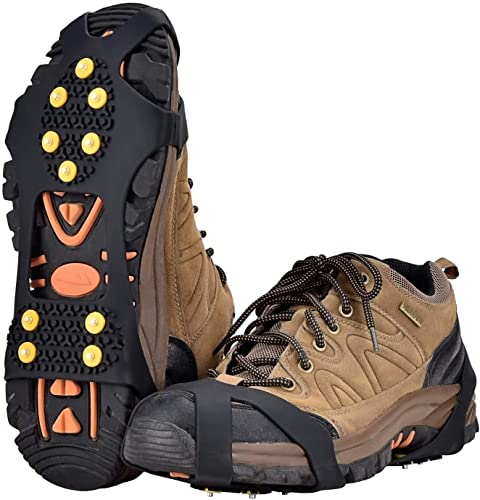
Aliglow Ice Snow Grips Over Shoe/Boot Traction Cleat Spikes Anti Slip Footwear
Best for: Budget buyers
Suits shoppers who want a basic over-shoe grip for occasional icy days rather than heavy winter use.
Pros
- Budget-friendly entry point
- Fits a range of shoe and boot sizes
Cons
- Durability may not match premium options
Buying Guide
Level of Ice and Snow You Face
Think about the conditions you walk in most often. Light snow and occasional glaze call for a lighter, low-profile cleat, while packed snow, deep drifts, or frequent glare ice call for models with more aggressive spikes or coils. Matching the cleat to your typical conditions helps you avoid paying for more traction than you need or getting caught with too little.
Spike Type and Grip Style
Cleats use different traction elements, including short coils, longer steel spikes, and studded rubber treads. Coil-style cleats tend to handle packed snow and light ice well, while spiked designs are better suited to hard, slick surfaces. Check whether the spikes are stainless steel, since that affects how well the cleat resists rust and wear over repeated use.
Fit and Boot Compatibility
Cleats stretch over footwear, so sizing matters. Look at the size range listed for each product and compare it to your shoe size, keeping in mind that some sizes are designed for larger boots. A snug but comfortable fit keeps the cleat from slipping off or pinching the sole, and an easy-on, easy-off heel tab can make daily use much simpler.
Durability and Materials
Walking on pavement, curbs, and rock can wear down cleats quickly. Look for abrasion-resistant elastic bands and sturdy steel construction if you plan to use them often or on rough terrain. Lighter models are easier to carry and store, but heavier-duty builds usually last longer under frequent use.
Intended Use
Decide whether you need cleats mainly for quick trips across a driveway or for longer walks, hikes, or outdoor work. Everyday city walkers may prefer a simple, lightweight pair, while hikers and people working outdoors may want something with more aggressive traction and a more secure fit. Choosing for your main use case keeps the decision practical.
FAQ
Do winter walking ice cleats fit over any shoe or boot?
Most cleats are designed to stretch over a range of footwear, but fit depends on the sole shape and the size range of each product. Check the listed sizes against your shoe size before buying. Flat-soled shoes and lug-soled boots can both work, though some cleats grip one type of sole better than the other.
Are ice cleats safe to wear on dry pavement?
Cleats can be worn on dry surfaces, but spikes and coils may wear down faster and can feel awkward on hard, flat ground. Many people take them off once they reach cleared or dry areas. Removing them when you do not need them helps extend their life.
How do I keep ice cleats from slipping off my boots?
A proper fit is the most important factor, so choose the size that matches your footwear. Pull the cleat fully over the sole and make sure the heel and toe areas sit securely. Adjusting the cleat before each walk can prevent it from shifting during use.
How should I store ice cleats after winter?
Dry them completely before storing to prevent rust on any metal parts. Keep them in a cool, dry place away from direct sunlight, which can degrade elastic bands over time. Storing them flat or in a bag helps them keep their shape until next season.
Can ice cleats be used for hiking or outdoor work?
Some models are suited to hiking, mountaineering, and outdoor work, especially those with stronger spikes and more durable construction. Lighter cleats are better for casual walking on sidewalks and driveways. Consider how rough the terrain is before choosing a pair for demanding activities.
How long do winter walking ice cleats usually last?
Lifespan depends on how often you use them and what surfaces you walk on. Frequent use on pavement and rock wears spikes and bands faster than occasional use on snow. Inspecting them regularly for worn coils, loose bands, or bent spikes will help you know when it is time to replace them.
Conclusion
If you mostly walk sidewalks and driveways with occasional ice, a lighter, low-profile option is a practical choice, while those facing deep snow or heavy ice should consider a high-profile or spiked model. Buyers with larger boots will want to check size ranges closely and may prefer an easy-spike design for a secure fit.
Hikers and people walking longer distances on rough, slick terrain are better served by the more durable, aggressive-grip options, while daily commuters who want simple, quick-on, quick-off cleats may find an easy-to-use model most convenient. Match the cleat to your conditions and footwear, and the right pair will make winter walking much safer.
Related reading
- Outdoor 360 Ice Cleats: Which Should You Buy for Winter Walking?
- Microspikes vs Ice Cleats (2026): Which Is Better for Winter Walking?
- How to Wear Ice Cleats: A Step-by-Step Guide for Safe Winter Walking
- How to Put On Celsius Ice Cleats: A Step-by-Step Guide for Winter Walking
- How to Put Ice Cleats on Boots: A Step-by-Step Guide for Winter Walking
About Colin Foster
Colin Foster is part of our editorial team and reviews and edits our everyday winter gear guides, checking product details against manufacturer specifications and owner feedback.
About the author
Colin Foster writes reviews and buying guides for Snow Crystals.